
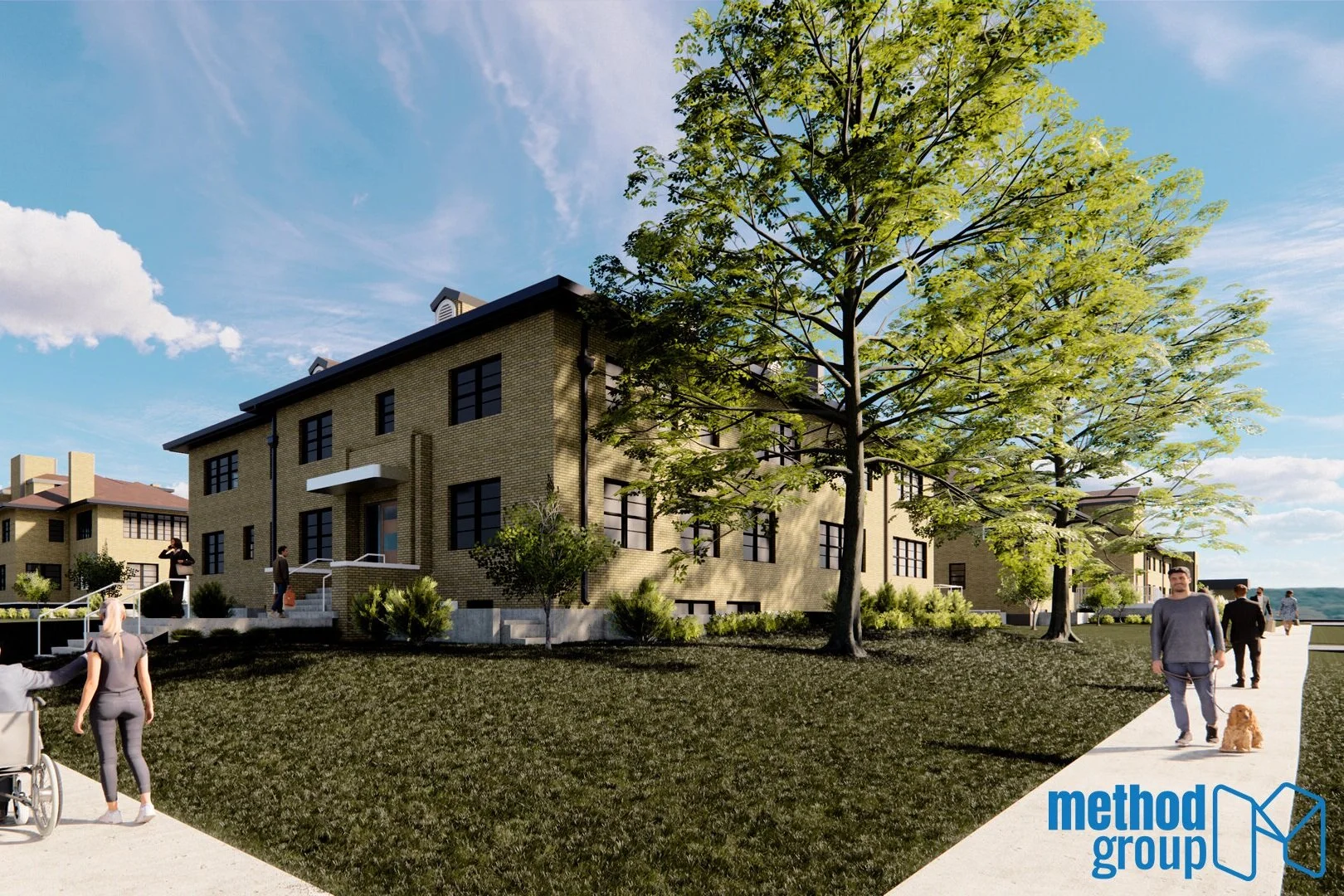
Small cities are under growing pressure to deliver multifamily housing that meets real demand without losing the character, trust, and livability that make those places work. Employers need housing for their workforce. Residents need attainable options that feel stable and dignified. Local leaders need development that strengthens the tax base without overwhelming infrastructure or community identity.
Multifamily housing can be a powerful solution in this context, but only when site and building design are handled with care. What works in a dense urban core does not always translate to a smaller city. Scale, circulation, adjacency, and community perception matter more when every project is highly visible and closely felt.
Method Group works alongside developers, municipalities, and institutions to design multifamily housing that fits small cities instead of overpowering them. Their approach balances technical rigor with human empathy, helping projects succeed not just on paper, but in daily life.
This article outlines the essential site and building design considerations that drive successful multifamily housing in small cities, and how Method Group helps align those decisions with long-term community and financial health.
Why Small Cities Require a Different Multifamily Approach
In small cities, every multifamily project carries more weight. A single development can influence neighborhood perception, local politics, and future growth patterns for years. Unlike large metros, where multifamily housing is expected and often anonymous, small cities experience it as a visible statement about change.
This reality shapes design priorities. Buildings must feel intentional, scaled, and connected. Sites must respect existing patterns of movement, infrastructure capacity, and daily routines. Residents must feel that new housing belongs, not that it was dropped in from somewhere else.
Method Group understands these dynamics deeply. They design multifamily housing that responds to local context rather than imposing a generic model. This sensitivity is often what determines whether a project gains community support and long-term success.
Site Selection as the Foundation of Success
Every successful multifamily project begins with a thoughtful understanding of its site. In small cities, site selection can either support livability or create friction that no amount of design polish can fix later.
Key site considerations include:
Proximity to employment centers, schools, and services
Walkability to daily needs such as groceries, parks, and transit
Existing traffic patterns and street hierarchy
Utilities and infrastructure capacity
Adjacent land uses and neighborhood character
Environmental factors such as floodplains, slope, and sun exposure
Method Group evaluates sites not just for what they can hold, but for how people will experience them. They look at how residents will arrive home, where they will walk, how children might move through the area, and how the building will be perceived from nearby streets.
By grounding site analysis in lived experience, they help clients avoid locations that create operational headaches or resident dissatisfaction later.
Building Placement That Supports Community and Comfort
How a building sits on its site matters as much as the building itself. In small cities, thoughtful placement can help multifamily housing feel integrated rather than isolated.
Important placement strategies include:
Orienting buildings to define streets and public space
Creating clear and welcoming entry sequences
Buffering residential areas from noise or incompatible uses
Using building massing to transition between scales
Preserving existing trees or landscape features where possible
Method Group pays close attention to these relationships. They design building placement that supports both privacy and connection, helping residents feel secure while remaining part of the broader neighborhood.
Scale and Massing That Feel Appropriate
One of the most common challenges in small city multifamily housing is scale. Buildings that are technically within zoning limits can still feel overwhelming if massing is handled poorly.
Successful projects use strategies such as:
Breaking large volumes into smaller, articulated forms
Stepping back upper levels to reduce perceived height
Varying materials and textures to soften mass
Aligning building elements with surrounding context
Designing facades that feel residential rather than institutional
Method Group approaches massing as a tool for trust building. When a building looks like it belongs, opposition decreases and acceptance grows. This not only improves community relationships but also reduces entitlement risk and delays.
Circulation That Feels Clear and Safe
Circulation is often underestimated in early planning, yet it shapes daily resident experience more than many visible features. In small cities, where residents may include families, seniors, and people with varying mobility needs, clarity and comfort are essential.
Effective circulation design includes:
Clear pedestrian routes from parking and transit to units
Well lit corridors and stairwells
Logical wayfinding that reduces confusion
Separation of service and resident paths where possible
Safe and intuitive vehicle access without dominating the site
Method Group designs circulation with empathy. They imagine first time visitors, late night arrivals, parents carrying groceries, and maintenance staff responding to a call. This perspective leads to environments that feel easy to navigate and inherently safer.
Unit Mix That Reflects Local Demand
Small cities rarely have the same unit mix needs as large urban markets. Workforce demographics, household sizes, and cultural patterns vary widely. Designing the wrong mix can hurt occupancy and turnover.
Method Group works with clients to analyze local conditions and design unit mixes that support:
Single workers and couples
Families with children
Seniors aging in place
Multigenerational households where appropriate
This thoughtful approach helps ensure that units align with real demand, reducing vacancy risk and stabilizing long-term performance.
Unit Design That Prioritizes Livability
Within each unit, design decisions directly affect resident satisfaction. In workforce and attainable housing, livability matters more than novelty.
Key unit design principles include:
Efficient layouts that minimize wasted space
Natural light in primary living areas
Logical kitchen and bathroom configurations
Adequate storage for everyday life
Acoustic separation between units
Method Group focuses on these fundamentals. By prioritizing function and comfort, they help create homes residents are proud to live in, even at modest price points.
Shared Spaces That Support Everyday Life
In small city multifamily housing, shared spaces often serve as important social infrastructure. When designed well, they support connection without creating operational burden.
Successful shared spaces often include:
Modest indoor gathering rooms
Outdoor seating areas with shade
Play spaces that are visible and safe
Laundry rooms designed with dignity and comfort
Pathways and courtyards that encourage casual interaction
Method Group designs shared spaces as extensions of daily life, not showpieces. Their goal is to create environments residents naturally use, strengthening community and retention.
Parking and Mobility Balance
Parking remains an important consideration in small cities, but it must be balanced carefully. Over parking increases cost and consumes valuable land. Under parking frustrates residents and neighbors.
Thoughtful parking strategies include:
Right sizing parking counts based on local behavior
Designing parking to minimize visual impact
Providing safe pedestrian connections from parking to buildings
Considering future mobility trends without overcommitting resources
Method Group helps clients navigate this balance with realism and foresight, supporting both current needs and future adaptability.
Infrastructure and Utilities as Design Drivers
In small cities, infrastructure capacity can be a limiting factor. Water, sewer, stormwater, and power systems may not be designed for sudden density increases.
Early coordination around infrastructure helps:
Avoid costly late stage redesigns
Inform realistic phasing strategies
Support long-term operational reliability
Build trust with local utility providers
Method Group integrates infrastructure considerations early, aligning building design with what the site and city can realistically support.
Designing for Long-Term Maintenance and Operations
Successful multifamily housing must perform well long after opening day. Operational efficiency directly impacts NOI and resident satisfaction.
Design decisions that support operations include:
Durable materials in high traffic areas
Clear access to building systems
Logical trash and recycling layouts
Lighting that balances security and efficiency
Visibility that supports staff oversight
Method Group collaborates with property management perspectives early, ensuring buildings support daily operations instead of creating ongoing challenges.
Aligning Design With Community Expectations
Community acceptance is often a decisive factor in small city projects. When residents feel excluded or surprised, opposition grows. When they feel heard and respected, trust forms.
Method Group supports engagement processes that:
Clearly communicate project goals
Use accessible language and visuals
Connect design decisions to community benefits
Provide transparency around tradeoffs
This approach helps multifamily housing be seen as a positive addition rather than a threat.
Phasing for Feasibility and Flexibility
Many small city multifamily projects benefit from phased development. Phasing can reduce financial risk and allow communities to adapt gradually.
Thoughtful phasing strategies:
Deliver complete, usable environments at each stage
Align infrastructure investment with growth
Maintain design coherence over time
Preserve flexibility for future adjustments
Method Group helps clients design phasing strategies that support long-term success rather than short-term compromise.
Why Method Group Is the Right Partner for Small City Multifamily Housing
Designing multifamily housing in small cities requires more than technical competence. It requires listening, empathy, and an understanding of how buildings shape everyday life.
Method Group brings:
Deep experience with small and mid sized communities
A human centered design philosophy
Strong coordination with planners, engineers, and stakeholders
A commitment to long-term livability and performance
They help clients move from uncertainty to clarity, from tension to alignment, and from ideas to buildings that truly work.
Moving Forward With Confidence
Multifamily housing will continue to play a critical role in the future of small cities. When designed thoughtfully, it can support workforce stability, economic growth, and community resilience. When designed poorly, it can create lasting friction.
Method Group helps ensure the former. By grounding site and building design in real human needs and operational realities, they create multifamily housing that feels appropriate, livable, and enduring.
If you are planning a multifamily housing project in a small city and want a partner who understands both the technical and human sides of design, Method Group is ready to help you move forward with confidence.