
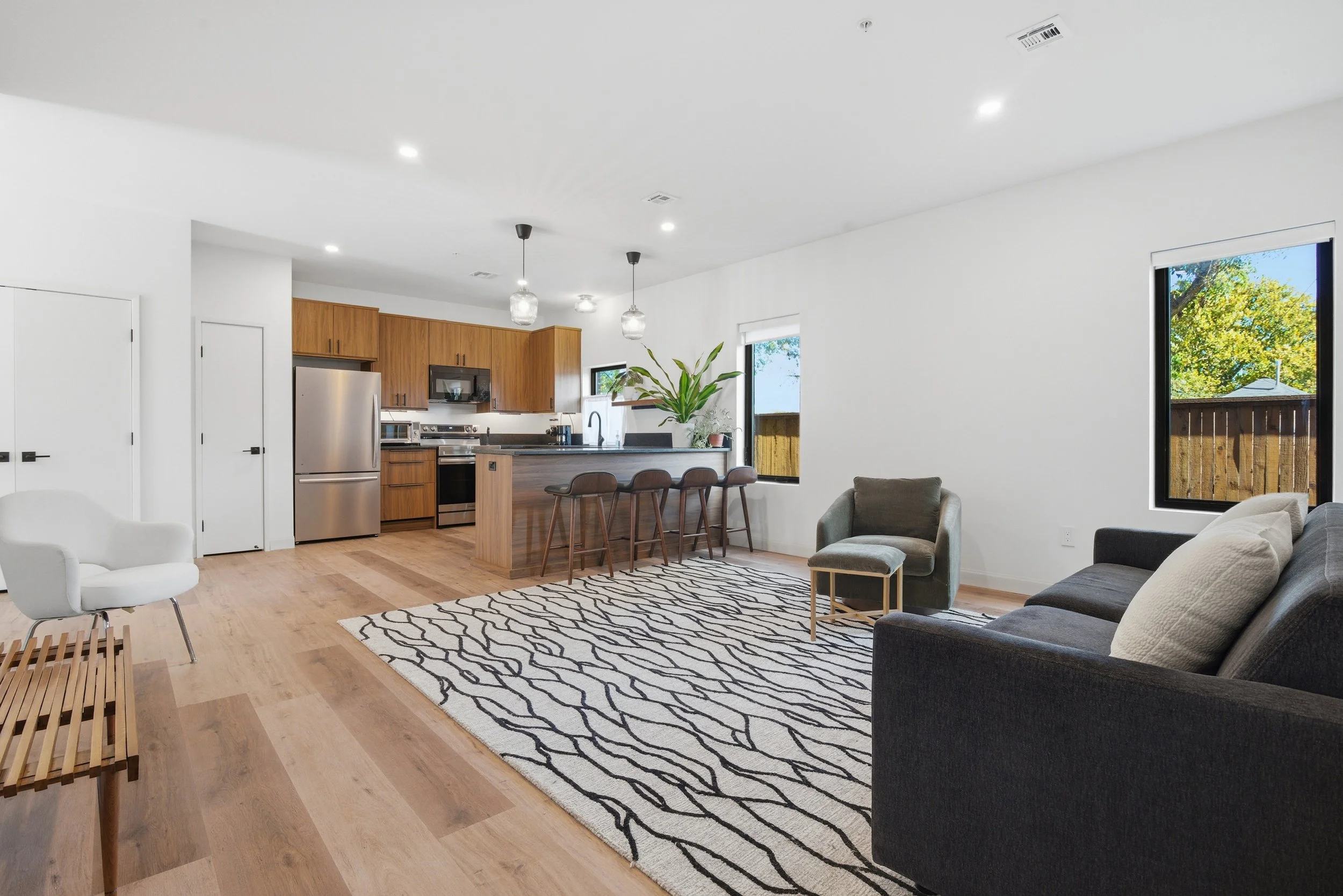
Workforce housing sits at the center of one of the most important challenges facing communities today. Cities need housing that teachers, healthcare workers, service employees, municipal staff, and young families can afford. Developers need projects that pencil. Residents need homes that feel safe, comfortable, and worthy of long term living.
Too often, these needs are framed as competing priorities. Affordability is treated as the opposite of quality. Budget discipline is seen as a constraint on good design. Workforce housing is positioned as something that must accept less in order to cost less.
That framing is outdated and unhelpful.
At Method Group, we believe workforce housing can feel grounded, dignified, and genuinely livable without exceeding realistic budgets. The key is thoughtful architecture. Not expensive architecture. Thoughtful architecture. Design that understands where dollars matter most, how people actually live, and how buildings perform over time.
This article explores how workforce housing can achieve a high quality residential experience through intentional design decisions, clear priorities, and an empathetic understanding of residents and operators alike. It also outlines how Method Group partners with developers, cities, and institutions to create housing that supports both people and long term financial health.
Understanding the Real Goal of Workforce Housing
Workforce housing is not about building the cheapest possible units. It is about delivering housing that works for people earning moderate incomes while supporting stability in the local economy.
Residents in workforce housing are often rooted in their communities. They work nearby. Their children attend local schools. They rely on predictable routines and dependable environments. Housing that feels temporary, poorly built, or emotionally disconnected undermines that stability.
The goal, then, is not to strip away quality. The goal is to focus quality where it matters most.
Method Group approaches workforce housing with a simple question: what does a resident need every day to feel comfortable, supported, and at home. That question becomes the filter for every design decision that follows.
Why Workforce Housing Design Often Misses the Mark
Many workforce housing projects struggle not because of budget alone, but because of misplaced priorities. When design decisions are made without a clear understanding of resident needs or long term operations, the result is housing that feels bare, institutional, or unnecessarily compromised.
Common challenges include:
Over simplified unit layouts that waste space
Materials chosen solely for lowest upfront cost
Poor acoustical separation between units
Limited natural light and ventilation
Shared spaces that feel leftover rather than intentional
Exterior design that signals transience instead of belonging
These issues are not inevitable. They are the result of design processes that focus too narrowly on cost per unit instead of value over time.
Method Group works to realign that focus. By understanding how residents use space and how buildings age, they help clients invest in decisions that pay dividends in comfort, retention, and operational efficiency.
Defining “High Quality” in Workforce Housing
High quality does not mean luxury finishes or oversized amenities. In workforce housing, quality is defined by how well a building supports daily life.
Residents notice quality in ways that are often invisible in marketing materials:
Units that feel quiet and private
Kitchens and bathrooms that function intuitively
Durable finishes that age gracefully instead of failing quickly
Hallways that feel safe and well lit
Outdoor spaces that offer relief and fresh air
Shared areas that feel welcoming without being extravagant
Method Group defines quality through performance, not appearance alone. A space that works well, feels calm, and holds up over time delivers far more value than a flashy feature that strains the budget and maintenance team.
Budget Conscious Design Starts with Clear Priorities
One of the most important steps in designing workforce housing is establishing clear priorities early. When everything is treated as equally important, budgets get strained and compromises happen in the wrong places.
Method Group helps clients identify:
Which elements directly impact resident comfort and retention
Which systems affect long term operating costs
Which design moves improve constructability and schedule certainty
Where simplification can reduce cost without reducing livability
This clarity allows design teams to make confident decisions instead of reactive cuts later in the process.
Unit Design That Maximizes Value Per Square Foot
In workforce housing, unit efficiency is critical. Every square foot must earn its place. Thoughtful unit design can significantly improve perceived quality without increasing area.
Key strategies include:
Logical layouts
Units that align furniture placement, circulation, and storage feel larger and more usable. Avoiding awkward corners, wasted hallways, and misaligned doors improves livability without adding cost.
Natural light and views
Access to daylight is one of the strongest predictors of resident satisfaction. Thoughtful window placement, unit orientation, and building massing can dramatically improve quality of life at little additional cost when planned early.
Acoustical comfort
Sound transmission between units is a major source of resident complaints. Investing in smart wall assemblies, floor systems, and unit stacking strategies reduces noise issues and improves retention.
Storage that supports real life
Small, well placed storage areas for cleaning supplies, coats, or daily essentials reduce clutter and stress. These features are often inexpensive but deeply appreciated by residents.
Method Group designs units by imagining the everyday routines of residents. Cooking dinner. Helping with homework. Relaxing after work. That empathy shapes spaces that feel intuitive and comfortable.
Material Choices That Balance Durability and Warmth
Material selection is one of the most misunderstood aspects of workforce housing design. There is often pressure to select the least expensive option without considering maintenance, replacement cycles, or resident perception.
High quality workforce housing favors materials that are:
Durable and easy to maintain
Resistant to wear and moisture
Warm in appearance and tactile experience
Readily available and constructible
Appropriate for the local climate
For example, a slightly higher initial investment in flooring or exterior cladding can reduce replacement costs and operational disruptions over time. Similarly, choosing finishes that feel residential rather than institutional helps residents feel pride in their homes.
Method Group works closely with clients to evaluate material choices through both a cost and experience lens. The goal is not to overspend, but to spend wisely.
Shared Spaces That Support Community Without Excess
Workforce housing does not require extensive amenity packages to feel complete. What it does require are shared spaces that are intentional, welcoming, and aligned with how residents live.
Effective shared spaces often include:
Simple outdoor gathering areas with seating and shade
Small, flexible indoor rooms for meetings or celebrations
Laundry spaces that feel safe and dignified
Children’s play areas that are visible and secure
Paths and courtyards that encourage casual interaction
These spaces do not need to be elaborate. They need to be thoughtfully placed and designed at a human scale.
Method Group designs shared spaces as extensions of daily life, not as marketing features. When residents feel comfortable using them, community forms naturally.
Exterior Design That Signals Stability and Care
The exterior of a workforce housing development sends a powerful message to residents and the surrounding community. Buildings that look temporary or cheaply assembled can reinforce stigma and undermine neighborhood trust.
Thoughtful exterior design focuses on:
Proportions that feel residential rather than industrial
Materials and colors that fit the local context
Entries that are visible and welcoming
Clear transitions between public and private spaces
Landscaping that softens scale and adds life
These choices do not have to increase cost. They require coordination, care, and an understanding of how buildings communicate identity.
Method Group helps clients create exterior designs that feel grounded and respectful, reinforcing the idea that workforce housing is an asset to the community.
Designing for Long Term Operations
A high quality workforce housing project must also function well behind the scenes. Maintenance teams, property managers, and service providers interact with the building every day. Design decisions that ignore their needs create long term inefficiencies.
Operational considerations include:
Clear access to mechanical and electrical systems
Durable finishes in high traffic areas
Thoughtful trash and recycling layouts
Lighting that balances security and energy efficiency
Visibility and sightlines that support safety
Method Group collaborates with operations teams early to ensure the building supports efficient management. When staff workflows are supported, operating costs stay predictable and resident experience improves.
Why Early Design Decisions Matter So Much
The most impactful cost and quality decisions in workforce housing happen early. Once a project is deep into documentation or construction, flexibility shrinks and changes become expensive.
Method Group emphasizes early alignment around:
Program and unit mix
Building massing and orientation
Structural and system strategies
Phasing and constructability
Budget assumptions and tradeoffs
This proactive approach reduces redesign, shortens schedules, and protects design intent. It also gives clients confidence that the project will remain feasible as it moves forward.
Aligning Design With Financial Reality
Designing workforce housing requires an honest understanding of financial constraints. Method Group does not design in a vacuum. They work within the realities of funding sources, incentives, and market conditions.
By integrating design and financial strategy, they help clients:
Avoid costly late stage redesigns
Make informed tradeoffs with long term value in mind
Prioritize investments that support retention and durability
Deliver housing that remains viable over decades
This alignment is essential for projects that aim to serve communities for the long term.
Workforce Housing as a Long Term Community Investment
Workforce housing is more than a development type. It is a statement about who a community values and supports. When designed with care, it provides stability, dignity, and opportunity.
Residents who feel respected by their housing are more likely to stay, invest in their community, and build lasting connections. Buildings that support those outcomes strengthen neighborhoods and local economies.
Method Group approaches workforce housing with this responsibility in mind. Their work reflects a belief that affordability and quality are not opposites, but partners.
How Method Group Can Support Your Workforce Housing Project
If you are exploring a workforce housing project, Method Group can help you navigate the balance between budget, quality, and long term performance.
They partner with developers, cities, and institutions to:
Define realistic goals and priorities early
Design efficient, livable unit layouts
Select materials that balance durability and warmth
Create shared spaces that foster connection
Align design decisions with financial and operational realities
If your goal is to deliver workforce housing that feels high quality, supports resident wellbeing, and remains financially responsible, Method Group offers the expertise and care to guide you there.
Contact us today to begin a conversation about how thoughtful architecture can elevate your workforce housing project while staying grounded in reality.